
Over 27 million Peruvians are set to vote in the first round of highly unpredictable presidential elections and elect a new Congress on 12 April.
With a record number of 35 candidates still in the presidential race, the polls have shown strong, week-to-week volatility.
The surprise emergence of an outsider candidate making it to the second round of presidential elections — like what happened with Pedro Castillo in 2021 — remains a possibility, considering all candidates are polling nowhere near the 50% of votes they’d need to secure a first-round victory.
Unstable, fragmented vote
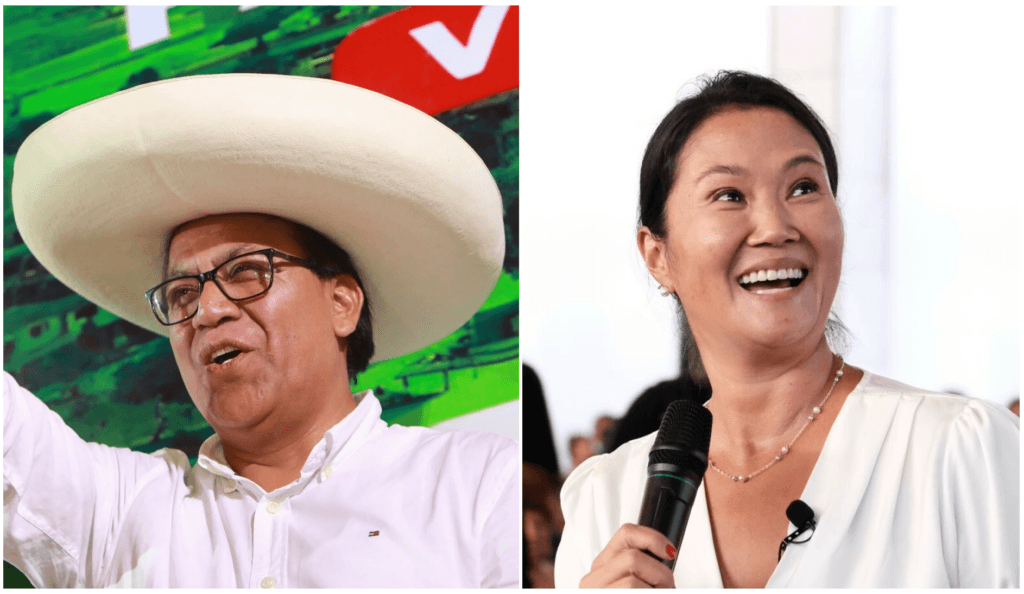
In the latest voting simulations, Keiko Fujimori, the daughter and political heir of former Peruvian dictator Alberto Fujimori (1990-2000), is ahead in the polls.
The right-wing candidate gathered 18.1% of the valid votes in a survey from newspaper El Comercio, and 18.6% in an IPSOS poll published by Peru21. Both projections were calculated in early April.
The most significant development is center-right candidate Carlos Álvarez’s rise to second position in both polls, from roughly 8% last week to 10.8% in the El Comercio survey and 12.1% in Peru21’s.
Rafael López Aliaga, the far-right former mayor of Lima, could be the candidate who lost the most ground ahead of Sunday’s election. After ranking among the top frontrunners for months, even rising above Fujimori at times in the polls, he dramatically plunged to 10.3% of voter intention according to El Comercio and 10.9% according to Peru21.
The two media outlet polls, however, differ regarding candidates outside of the current podium.
According to Peru21, Roberto Sánchez, a leftist former minister from Castillo’s government, is fourth as he surges to 9% of voting intention. He distanced himself from Jorge Nieto (center), with 5.6%, and César Acuña (right), with 5.1%. Four more candidates received more than 3% of votes in the poll.
El Comercio’s population sample does not entirely share Peru21’s sample’s enthusiasm for Sánchez. He is fifth with 7% of intended votes, behind Nieto (7.2%) and ahead of Ricardo Belmont (centre). The latter hiked up from 2.8% on March 27 to 6.5% in this latest poll. Again, four candidates stood above 3%.
Polling estimations are to be interpreted with extreme caution as the electorate’s indecision remains strong, and any of the outsiders could be misrepresented and/or profit from late momentum.
Ten days before the 2021 first round, El Comercio’s vote simulation put Castillo in sixth position with 7.9% of vote intentions.
In first-round elections at the time, the now-jailed president obtained 18.9% of the vote, surpassing Fujimori by five and a half percentage points before defeating her in the second round.
The left-wing president, who ran on a rural Indigenous platform, was imprisoned after attempting to dissolve Congress in late 2022. His Vice President, Dina Boluarte, took over the presidency, only to be ousted herself in October of last year.
After 36 years, a return to a bicameral legislature
For the first time since 1990, Peruvians will be voting for a bicameral Congress.
On Sunday, the country will vote for the lower house, known as the Chamber of Deputies, as well as seats in the Senate.
The Senate was eliminated in Alberto Fujimori’s 1993 constitution, a year after he shuttered Congress.
The legislative elections are held in every district in a single, proportional round.
In both chambers, parties must meet a 5% nationwide threshold or a minimum of seats (seven for the Chamber of Deputies, and five for the Senate) to enter the reformed Congress.
Peru’s deep political crisis
This Sunday’s elections will take place amid high political instability and an overall disdain for Peru’s political landscape by its electorate.
The country has seen eight presidents in the past 10 years, many of which cycled out via resignations, impeachments, and scandals.
Many Peruvians have also lost trust in their Congress, which has effectively become more powerful than the executive branch, and is held responsible for much of Peru’s current political crisis. According to Le Monde, more than half of congressmen are under investigation for corruption.
Out of all aforementioned candidates, only Fujimori, López Aliaga and César Acuña’s parties are members of the current Congress, highlighting the strong, yet fragmented, impetus for change in the Andean nation.
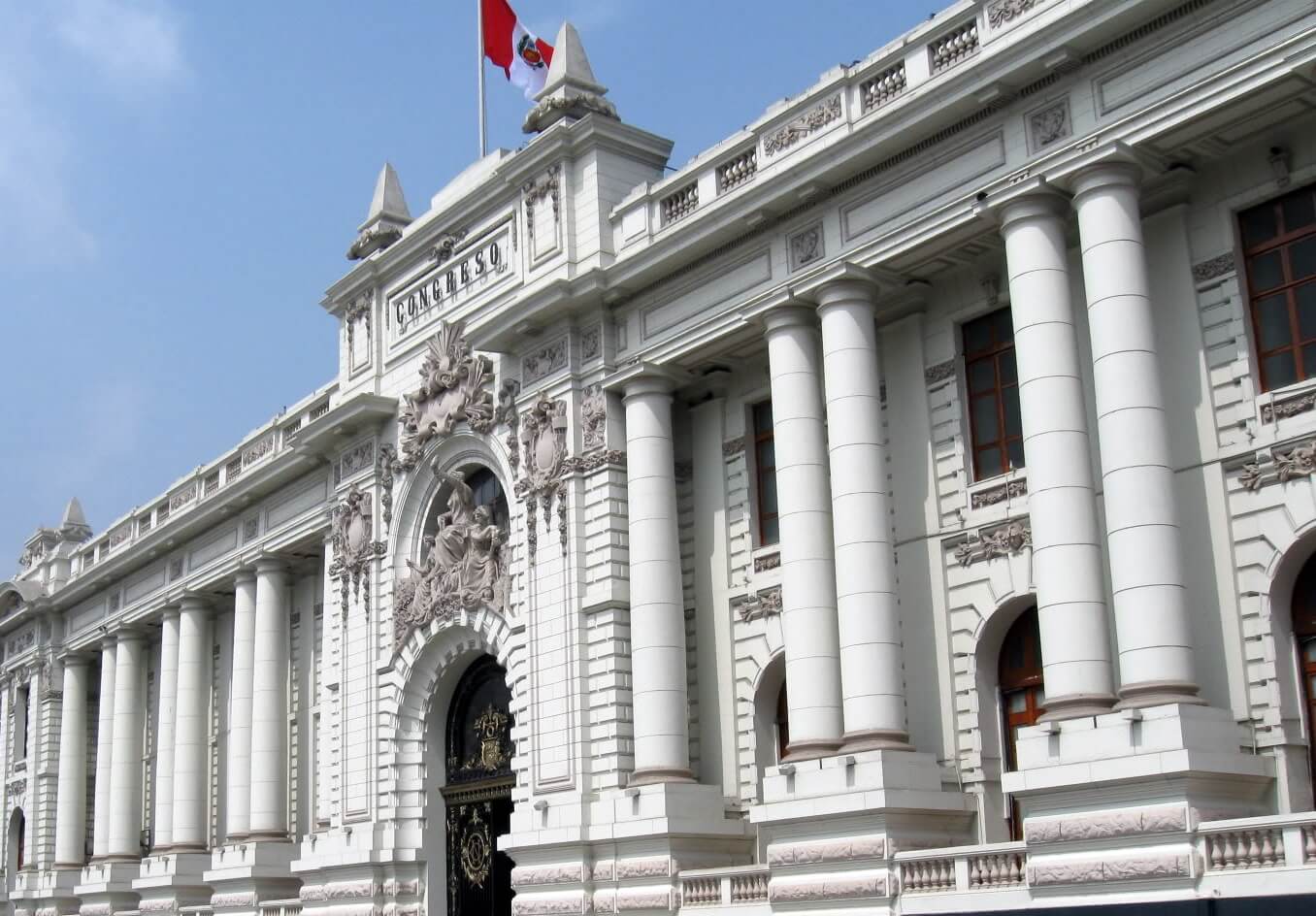
Featured image: Peru’s Congress
Image credit: Genu5960 via Wikimedia Commons