
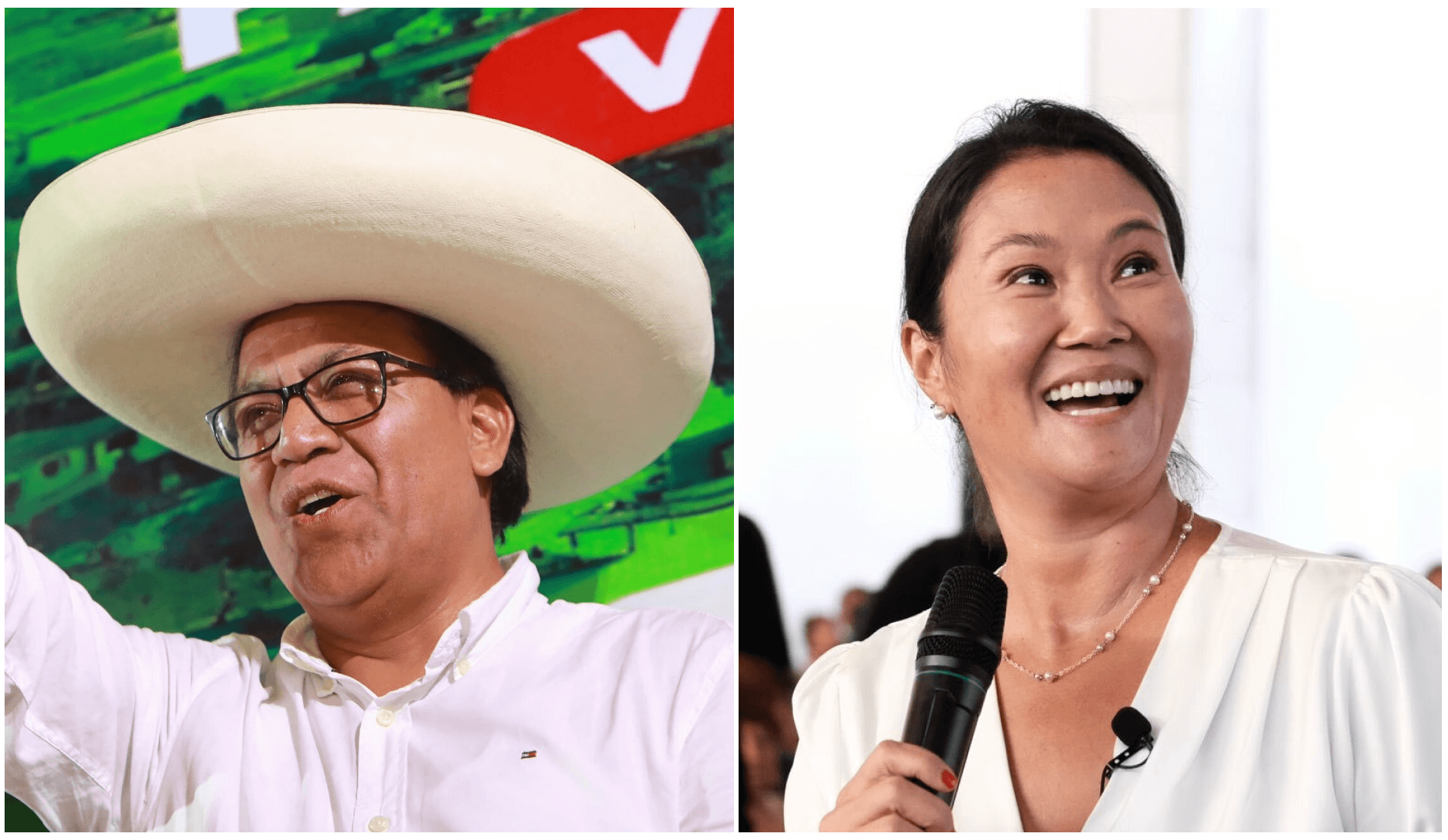
In yet another polarized Latin American election, Peru’s June 7 runoff pits two ideological opposites against each other.
Keiko Fujimori, the conservative daughter of former dictator Alberto Fujimori, and Roberto Sanchez, a left-wing congressman backed by jailed former President Pedro Castillo, won the first round of voting on April 12 with 17% and 12% of the vote, respectively.
The race comes as Peruvians have become all but fed up with their elected officials. A 2025 OECD study found that trust in government is lower in Peru than in any other Latin American or Caribbean country. With eight presidents in office in just 10 years, political instability has become a hallmark of Peruvian politics.
Scandals and accusations during this campaign haven’t done much to restore voter confidence.
As the final vote counts in April confirmed he would advance to the runoff, prosecutors charged Sanchez with financial crimes, accusing him and his brother of failing to disclose 280,000 soles ($81,720) in party contributions. His critics are calling for his disqualification.
“One cannot help but see this as a politically motivated move designed to remove him as a viable candidate,” Jo-Marie Burt, a senior fellow at the Washington Office on Latin America (WOLA) focused on Peru, told Latin America Reports in May.
In addition, delayed ballot deliveries and quick count releases during the first round prompted the resignation of the head of Peru’s elections agency.
Rafael Lopez Aliaga, a conservative candidate and Trump acolyte who didn’t make it to the second round, alleged electoral fraud and threatened to call for mass protests. He now faces a criminal complaint for inciting civil disorder.
Despite political differences, corruption extends beyond party lines
Despite an Ipsos poll from last year which found that crime, corruption, and political instability were at the top of Peruvians’ concerns, the electorate may be forced to choose between divergent political and economic ideologies that hold similar patterns of corruption.
“On economic issues, [the candidates] are substantially different. On rule of law, unclear,” Will Freeman, Latin America Fellow at the Council on Foreign Relations who studies corruption and organized crime in the region, told Latin America Reports.
On one hand, Fujimori’s Fuerza Popular party has sat at the center of Peru’s institutional decay for a decade. After winning a congressional majority in 2016, the party fought the anti-corruption investigations that grew out of the region-wide Odebrecht kickback scandal — probes that, Freeman acknowledged, “could fairly be argued to have gone too far at times.”
“But the response has been the dismantling of the justice system and rule of law in Peru,” he added. The Fujimori name is now “doubly associated” with authoritarianism.
In the shadow of her father’s dictatorship, marred by corruption and human rights abuses, Keiko is now plagued by “not only what her dad did, but what she herself has done,” he argued.
Opposition to the Fujimori family, or “anti-Fujimorismo”, has long been a pillar of Peruvian politics, and likely can be credited with snubbing Keiko’s three previous presidential bids.
However, her strength in the polls suggests that her opposition is weakening.
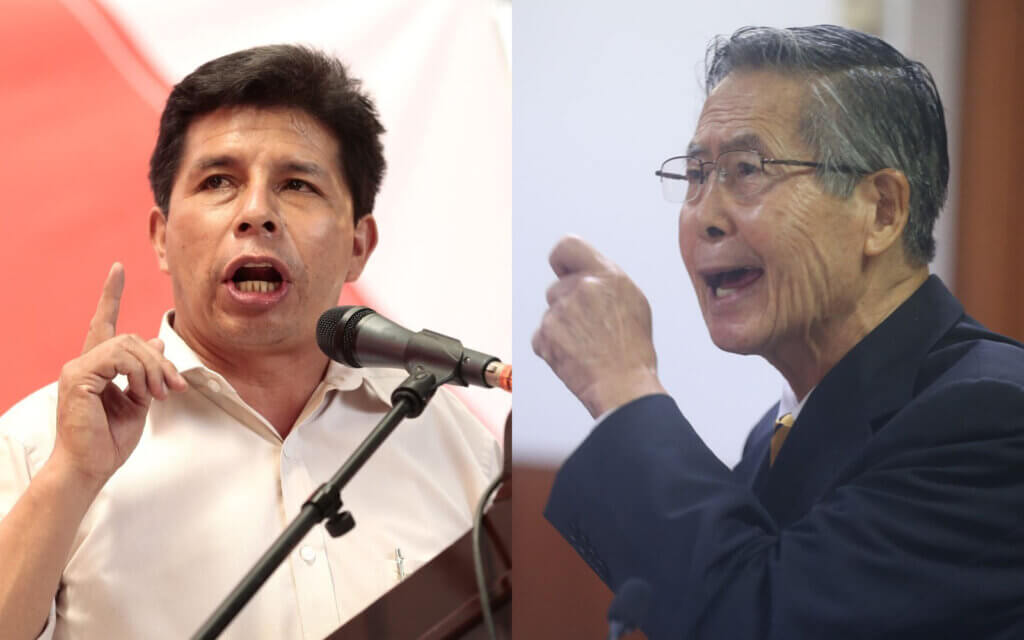
Freeman attributes Keiko’s current success less to her own appeal, and more to the collapse of the political coalition opposed to her family.
Sanchez-ally and leftist President Pedro Castillo, elected in 2021 with anti-Fujimorista backing, would go on to embrace his own form of abuse of power, attempting to dissolve Congress “like Alberto Fujimori himself, almost copying him exactly,” said Freeman. Last year, Castillo was sentenced to over 11 years in prison.
While the elections are often being framed as “left versus right”, corruption and dismantling of institutional power extends beyond party lines in Peru.
In congress, Castillo’s lawmakers and the Fujimoristas often voted together when it was in their interests, Freeman said. “Particularily in weakening the justice system and shielding themselves from investigation.”
China and the U.S. in Peru
Governments abroad, especially the U.S. and China, are paying attention to what happens in Peru on Sunday.
As Trump has set his sights on shoring up U.S. influence in Latin America during his second term, China, who has made significant investment inroads in LatAm countries over decades – most notably in Peru – also has its interests at stake.
“It’s sometimes not really stressed enough just how important Peru is to China,” Freeman said.
Beijing controls about half of Lima’s electricity supply and the new deepwater megaport at Chancay, with plans for an interoceanic corridor linking Brazil to the port as an export route for South American commodities.
Washington, by contrast, has largely written Peru off. Even under former President Joe Biden, Freeman said, there was a “tacit acceptance that the battle was already lost.”
It’s unclear whether the Trump administration’s more interventionist turn in Latin America will extend to Peru. A Fujimori win, and her ideological alignment with Washington, “may open space for a more direct U.S. military presence,” Freeman suggested, whether against coca production or in the ports, “similar to what Ecuador has done.”
It is unlikely Sánchez would allow the same. His progressivism and close ties to Castillo’s leftist movement could invite Trump’s ire, as has been the case in Cuba, Colombia and Venezuela.
Freeman also cautions against reading a Fujimori win as Peru joining the U.S.-allied right wing tide across the region.
“This is more of the culmination of that process than the start of some sudden authoritarian wave,” he said. Peru’s government has been effectively right-wing since Castillo’s removal in 2022, with a conservative Congress setting the agenda.
Featured image: Keiko Fujimori and Roberto Sanchez via their respective X accounts.